Keeping autonomous vehicles on track when urban GNSS is under pressure.
ReferenceGuangzhou Development District, "Guangzhou Huangpu Launches 24-Hour Autonomous Driving Robotaxi Demonstration Service," updated September 8, 2025: <
https://eng.gdd.gov.cn/20250908/ad4e1546-e89b-488b-8e84-70a1d4d6fc1c.html>
Technical background: ESA Navipedia, "Antennas": <
https://gssc.esa.int/navipedia/index.php?title=Antennas>
Note: CRPA primarily mitigates directional RF interference. Building blockage and multipath should be addressed through antenna placement, multi-frequency/multi-constellation reception, receiver algorithms and multi-sensor fusion. Final frequency coverage, number of antenna elements, nulling performance, environmental rating and automotive qualification must match the selected product configuration.
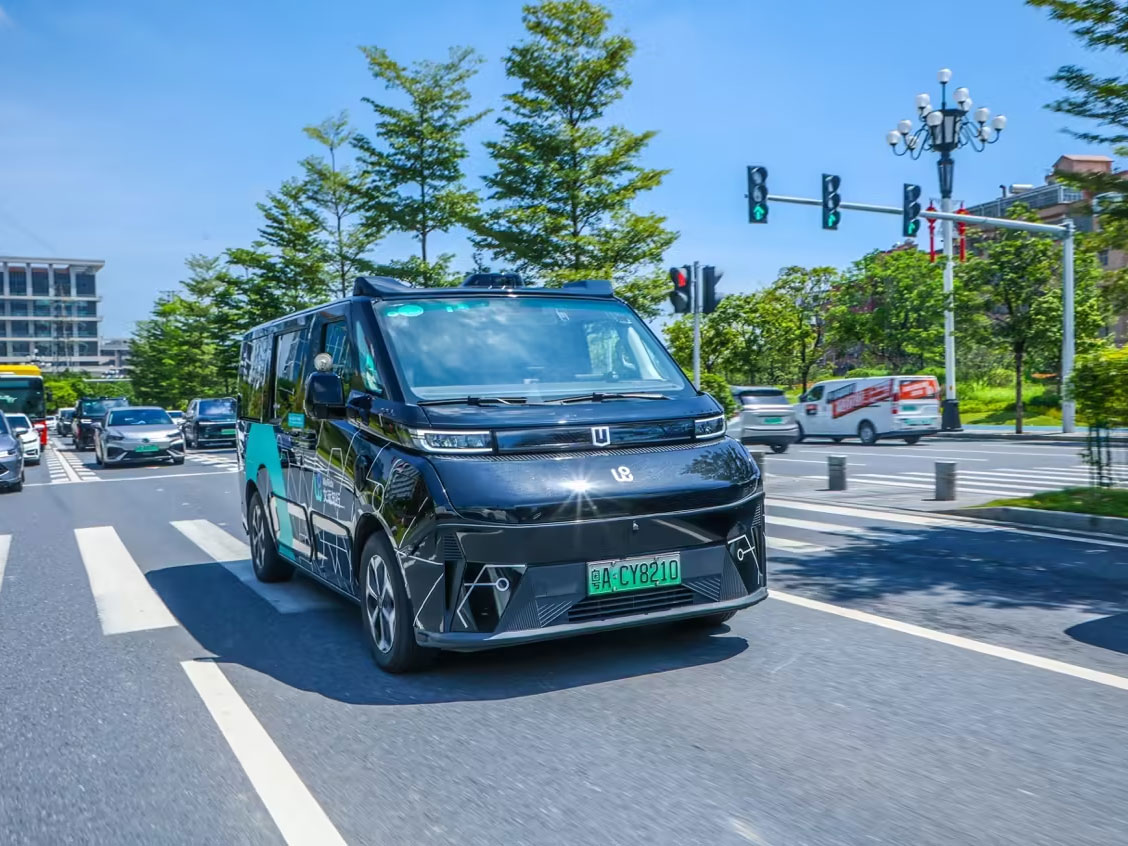
Guangzhou's robotaxi industry is moving from supervised trials toward around-the-clock driverless mobility. In Huangpu District, a new L4 robotaxi entered 24/7 demonstration operation, highlighting how autonomous mobility is becoming part of everyday urban transport. As the onboard safety operator disappears, every safety-critical subsystem must remain dependable - including positioning.
 The Problem
Urban roads are difficult environments for satellite navigation. High-rise buildings block direct GPS and BeiDou signals and reflect them along multiple paths. At the same time, in-band radio-frequency interference - whether accidental or intentional - can overpower the extremely weak signals arriving from orbit.
The result may be degraded accuracy, delayed recovery or a complete loss of GNSS availability. A vehicle may still "see" the road through cameras and LiDAR, but unreliable global position and time can reduce confidence in lane-level localization, map matching, routing, geofencing and fleet supervision.
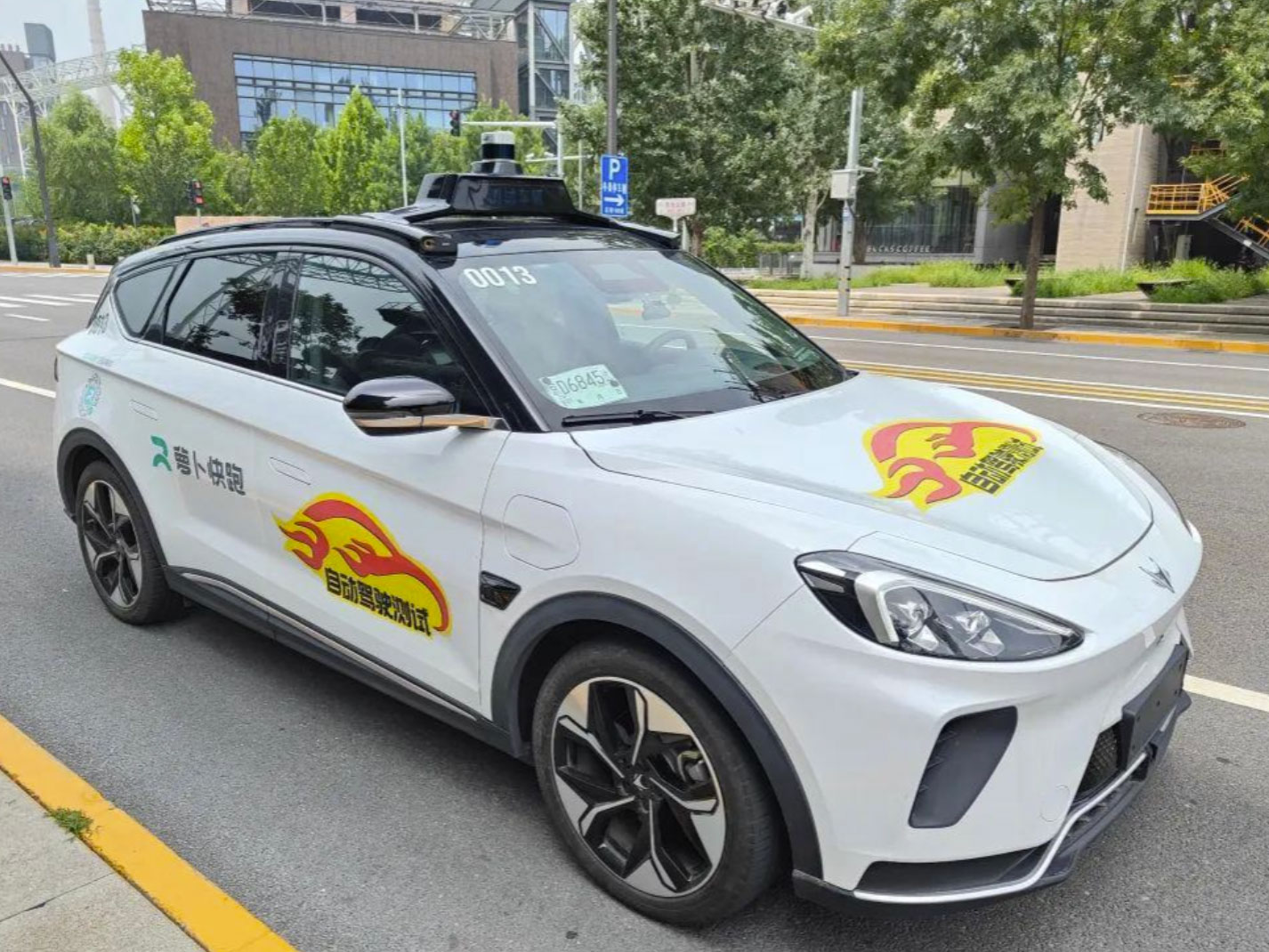
Why It Must Be SolvedWith no safety operator in the driver's seat, a robotaxi must detect positioning faults and remain controllable without human intervention. Reliable position, velocity and time are essential for safe motion planning, consistent behavior at junctions, accurate pickup and drop-off, and rapid transition to a minimal-risk condition when navigation integrity falls below an acceptable level.
Positioning resilience is therefore not just about accuracy. It is about **continuity, availability and integrity** throughout the journey.
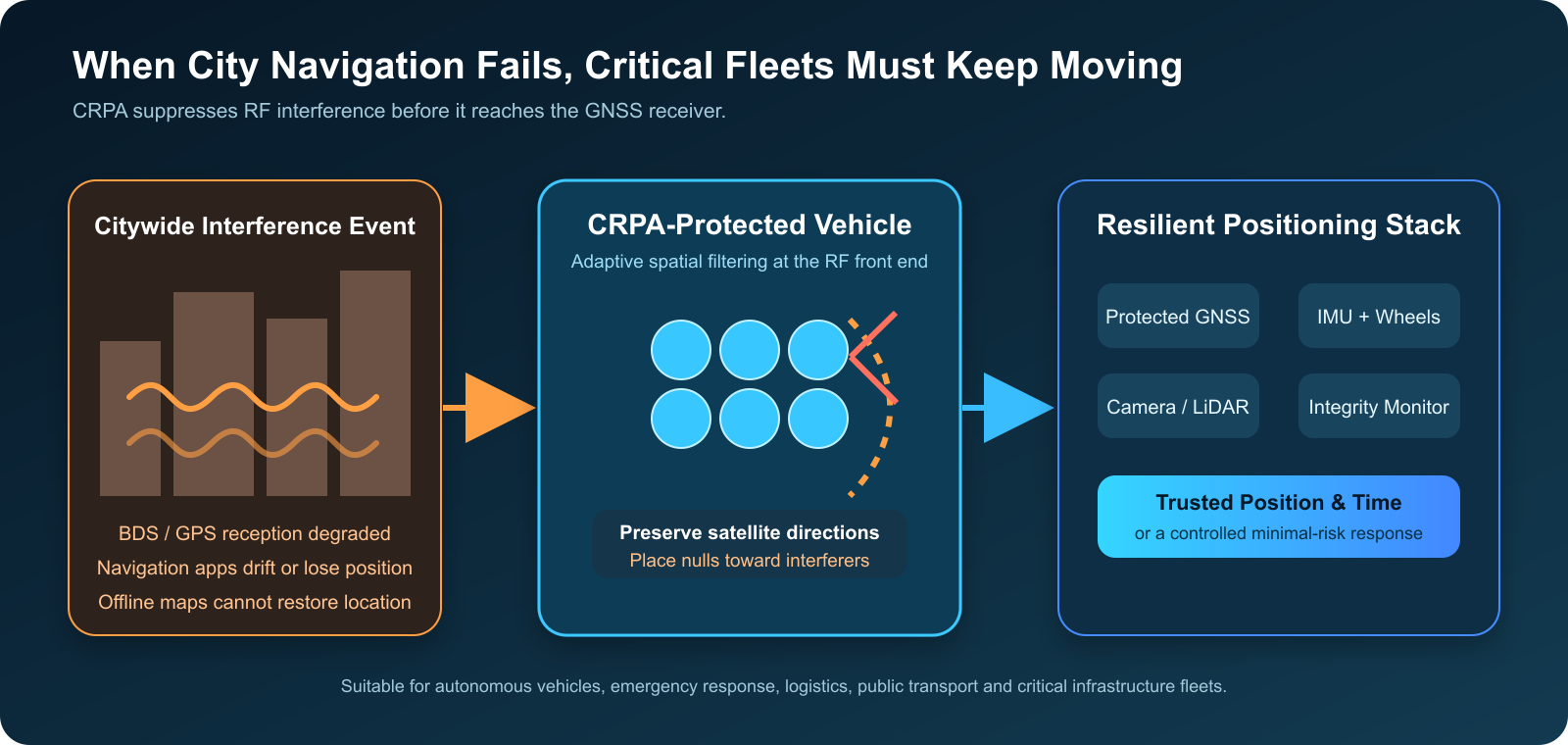
The Solution: CRPA-Protected Multi-Sensor PositioningInstall a compact **Controlled Reception Pattern Antenna (CRPA)** on the vehicle roof as the protected RF entry point for GPS, BDS and other supported GNSS constellations. Unlike a conventional single-element antenna, the CRPA uses multiple antenna elements and adaptive processing to estimate the direction of interference and place deep reception-pattern nulls toward the interferer, while preserving reception from satellites across the sky.
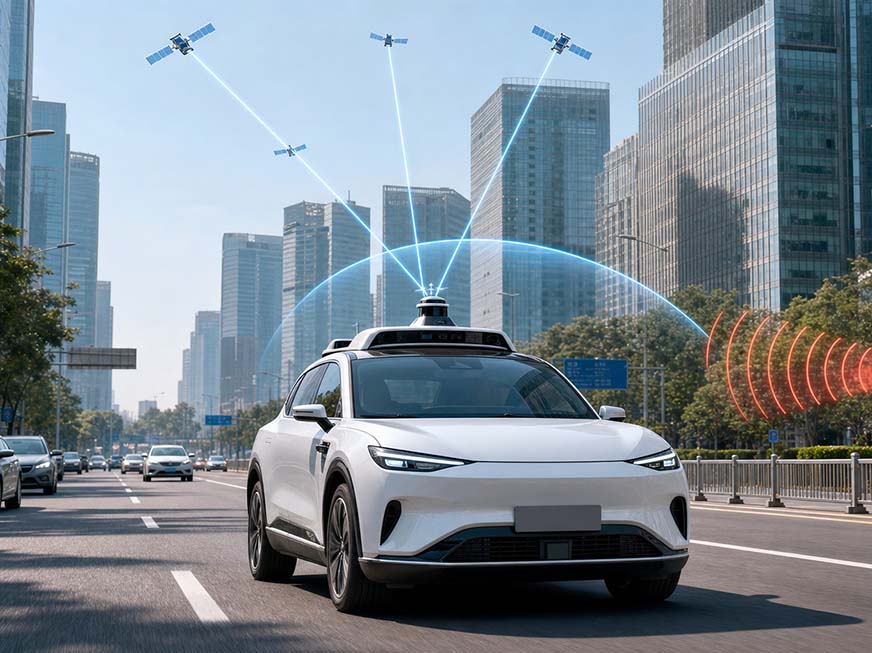 The CRPA should be integrated into a complete resilient-positioning architecture:
1. Protect the GNSS front end.** Adaptive beamforming and directional nulling suppress in-band interference before it can saturate or mislead the receiver.
2. Increase satellite diversity.** Multi-constellation, multi-frequency GPS/BDS/Galileo/GLONASS reception improves availability when part of the sky is blocked.
3. Fuse complementary sensors.** GNSS is tightly coupled with the IMU, wheel odometry, cameras, LiDAR and, where available, RTK corrections and HD maps.
4. Monitor integrity continuously.** The positioning engine detects inconsistent measurements, excludes faulty inputs and outputs a protection level with the navigation solution.
5. Trigger a safe fallback.** If trusted positioning cannot be maintained, the driving system slows, stops safely or follows the operator's defined minimal-risk strategy.
 Customer Value
- Stronger resistance to directional GNSS jamming
- Fewer positioning dropouts and faster recovery
- More stable lane-level localization in complex city traffic
- A robust GNSS foundation for sensor fusion and integrity monitoring
- Improved operational continuity for driverless fleets
Reliable autonomy starts with trusted positioning. Our automotive CRPA solution helps robotaxis keep receiving, keep localizing and keep operating safely when the urban RF environment becomes unpredictable.

